Can writing fiction about the eco-crisis do what science, advocacy, and journalism have not? As in, can storytelling uncover the root of our abusive relationship with the natural world and inspire meaningful action?

As someone who has worked on environmental issues for almost twenty years as an organizer and journalist, I can’t pretend that—despite increased “awareness”—nearly every single metric from land and water degradation to species extinction to air pollution to climate chaos has been getting worse.
Jonathan Swift once wrote, “Reasoning will never make a Man correct an ill Opinion, which by Reasoning he never acquired.” So, is it possible that made up tales about the Earth might slip past people’s defenses in a way that “reasonable” factoids and/or slogans rarely do?
For instance, while many of us won’t admit any validity to certain opposing viewpoints, it may feel safe for us to temporarily see through the eyes of a protagonist who thinks along those lines. Even if we don’t agree with that character’s way of looking at the world, fiction may help us develop empathy for that “other side.” Or, if nothing else, a story might foster discussion on a given topic, much better than dismissing those beliefs as too “wrong” to even engage with.
With all that in mind, I did my best to explore humankind’s imbalance with the ecosystems that give us life in my forthcoming eco horror novel, CHARWOOD (published August 21 from Aggadah Try It, pre-order paperback and e-book today!).
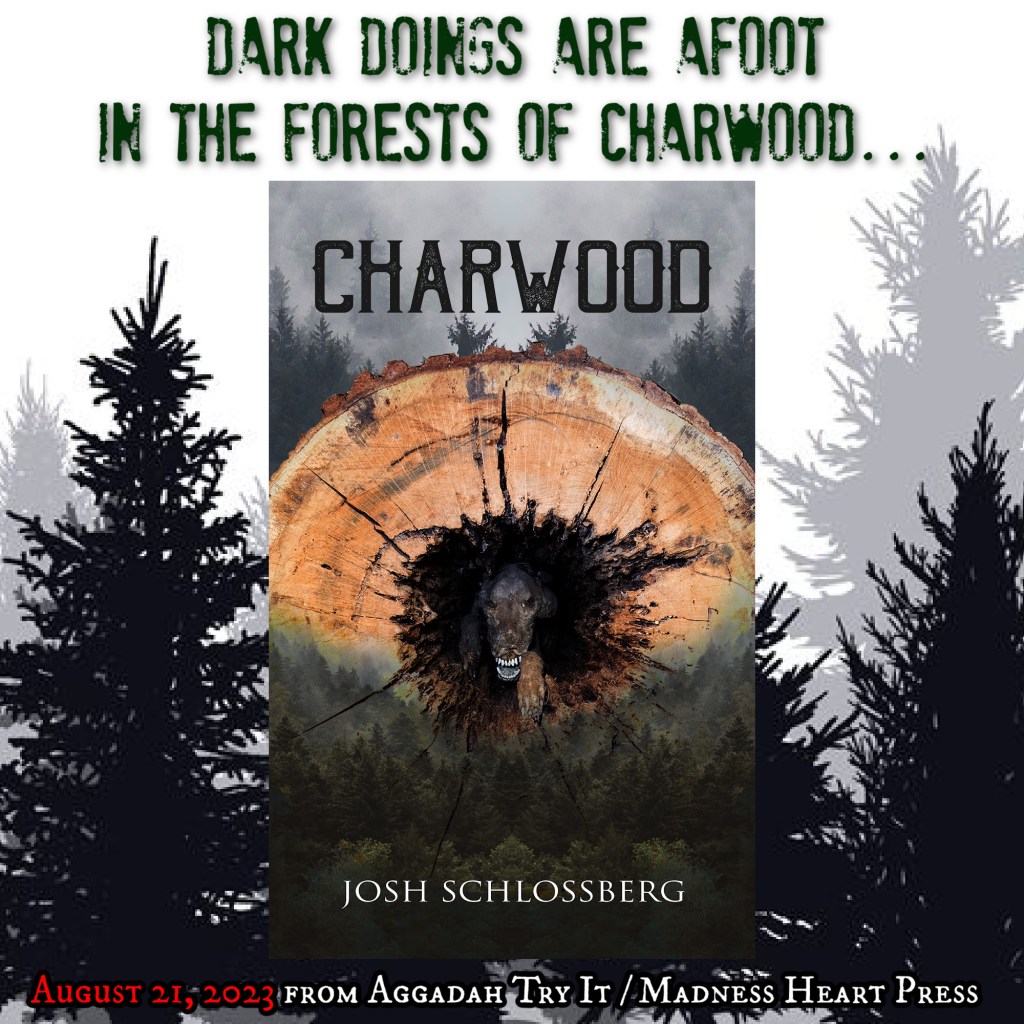
This doesn’t mean there won’t be folks across the ideological spectrum who dislike the actions of my protagonist, where the plots takes her, or even the themes behind the book. But what one cannot honestly claim in good faith is that I didn’t deliver a wide-spectrum take on the eco-crisis.
Does CHARWOOD get to the root of planetary collapse? I’m not sure. But I do think it’s safe to say I’ve explored the theme more deeply—if unconventionally—than the vast majority of fictional works I’ve read.
But here’s the best part. Even if you don’t give a lick for how I tackled the issue, I believe that CHARWOOD’s three-dimensional characters, driving plot, and carefully crafted prose allows it to stand on its own as simply a folk horror novel that can be enjoyed by anyone who loves a good story. So, maybe give it a read, and tell me what you think?
 Josh's Worst Nightmare